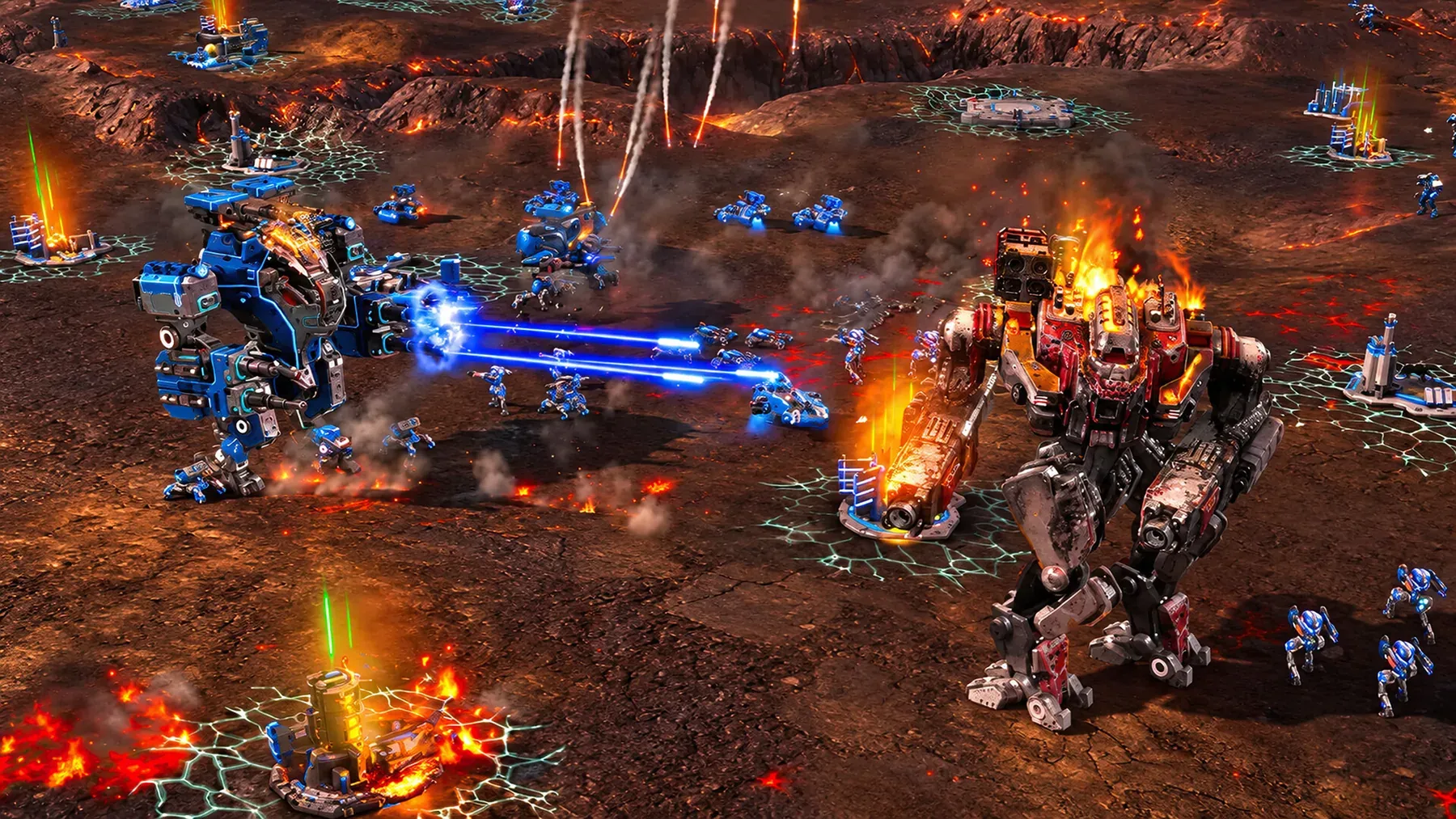
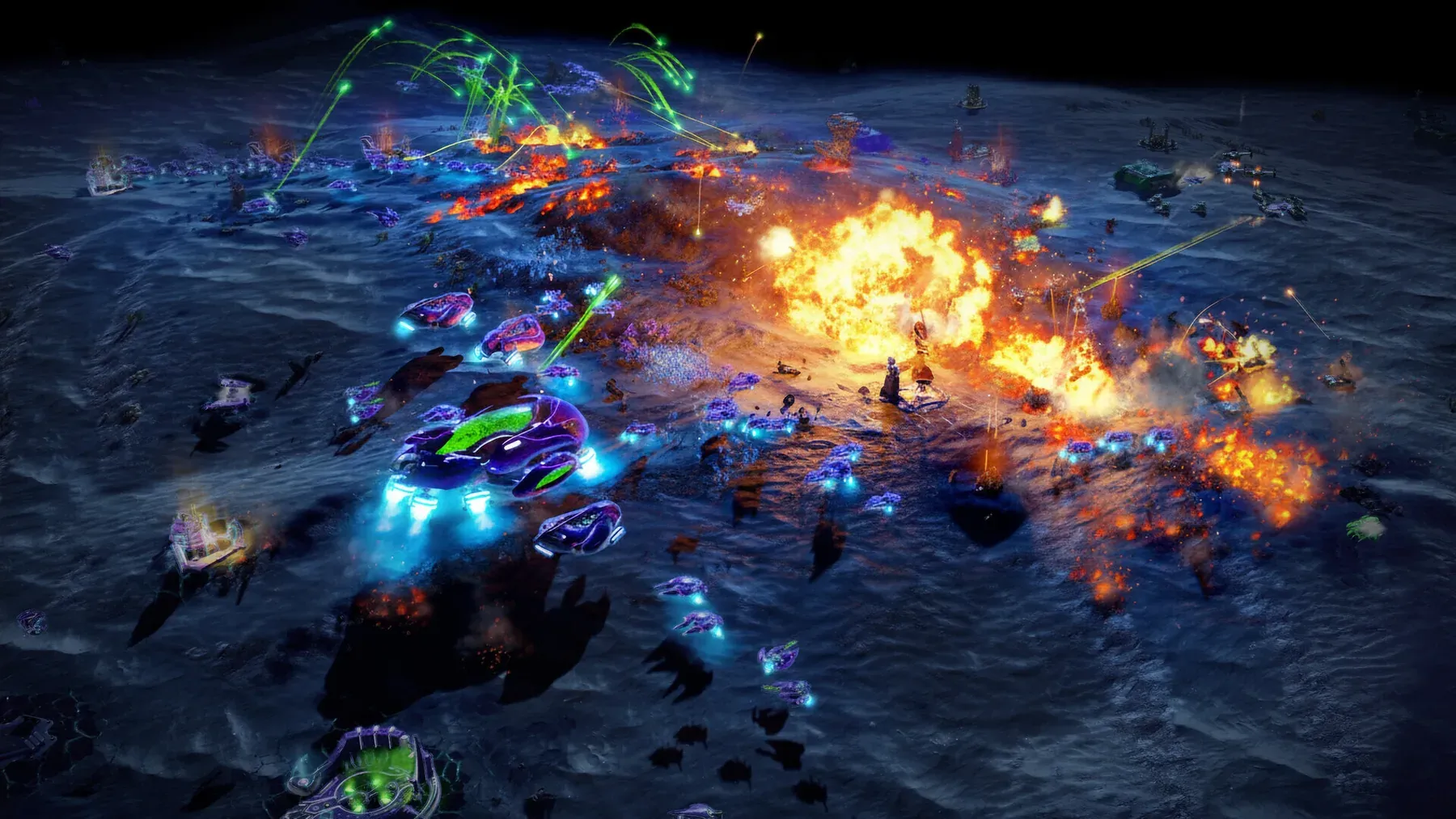
Massive armies, vast battlefields
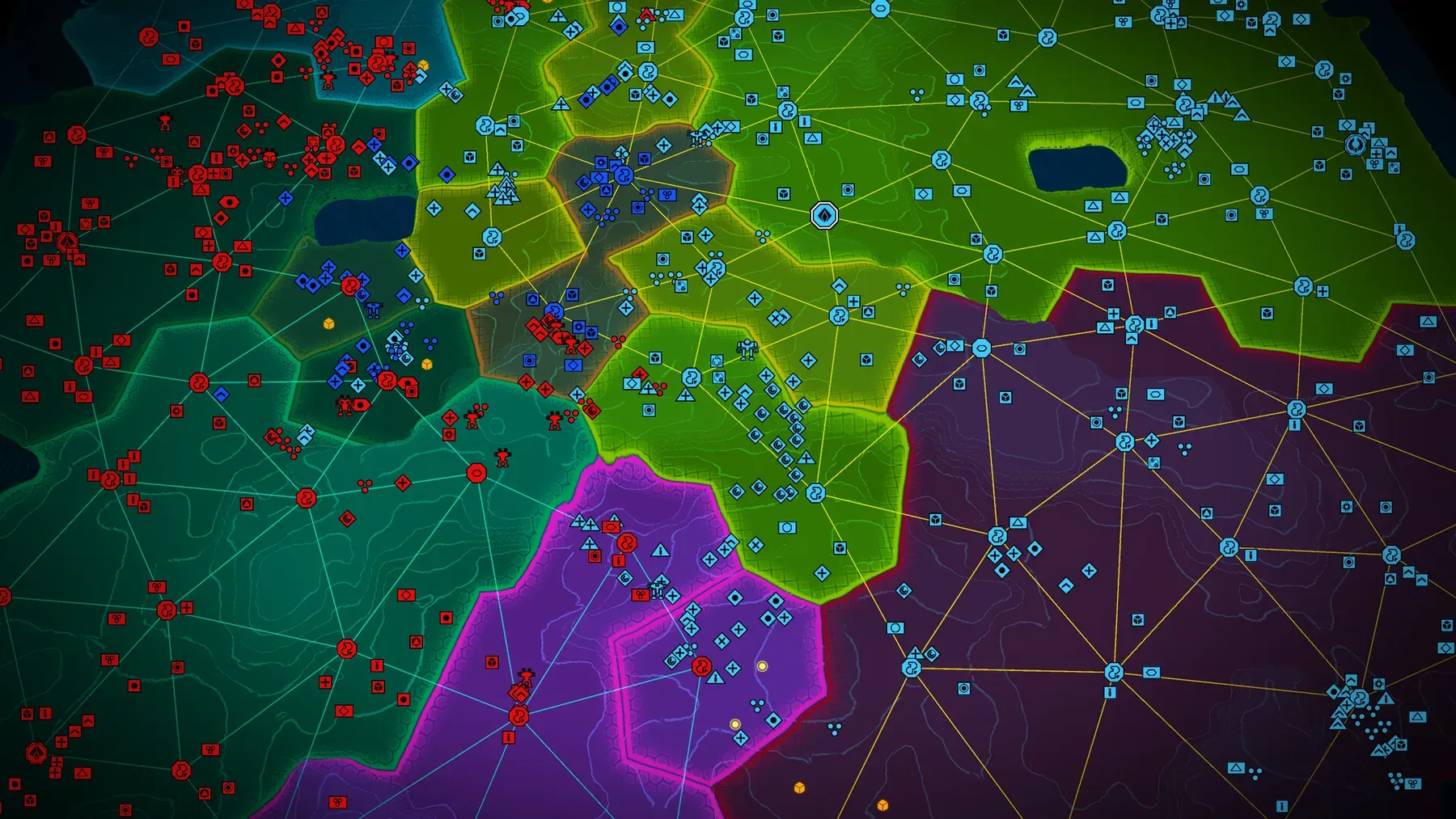
Command thousands of units across continent-sized battlefields and use Strategic Zoom to move from orbit to the frontline without a loading screen.
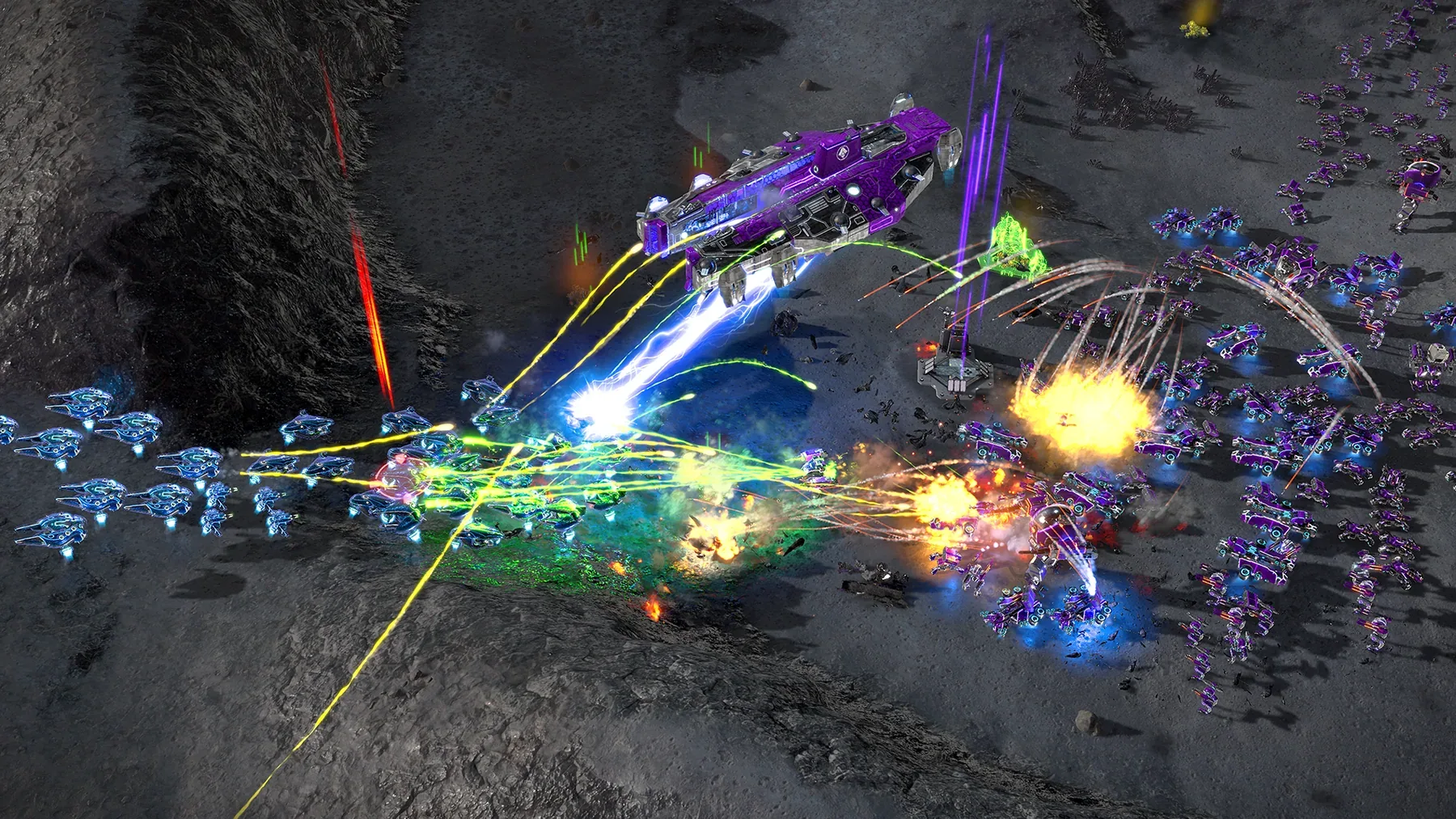
Ashes of the Singularity II · Game dossier
A massive-scale RTS from Oxide Games and Stardock Entertainment, built around three asymmetric factions, huge armies, regional logistics and a hostile solar system.
What is Ashes II?
Ashes of the Singularity II is the 2026 sequel to the 2016 real-time strategy game. It is set in 2031, after the technological singularity has produced superhuman intelligence, uploaded post-humans and a machine civilization that no longer answers to either.
The pitch is intentionally different from a tactical RTS. Maps are divided into regions. Units belong to armies. Production is distributed across the map. Strategic Zoom lets you read a continent-sized battle from orbit, then descend to the front. The aim is to make enormous battles feel manageable without turning them into a click contest.
This page is an overview, not a review. We are working from Stardock and Oxide Games’ public material ahead of the November 10 launch. For the release date, pricing and PC requirements, use the release brief.
Key features
These are Stardock’s own feature descriptions for the launch game, not our review findings. We will verify how they feel in the shipped build after November 10.
Command thousands of units across continent-sized battlefields and use Strategic Zoom to move from orbit to the frontline without a loading screen.
The human UEF, the uploaded Post-Human Coalition and Haalee’s machine Substrate each bring different units, economies of scale and battlefield philosophies.
Stardock’s design goal is a game decided by planning and logistics rather than fast hands. Armies absorb much of the unit-level micro.
The initial story campaign follows a UEF Commanding Officer and brings the conflict back to Earth and across the solar system. No prior game is required.
Terrain is scarred by battle, structures leave absence behind and areas can turn to or from Turinium. The battlefield records the fight.
Prebuilt competitive maps sit alongside procedural map generation for skirmish and multiplayer, making scouting part of every match.
Campaign, Instant Action, online co-op and competitive multiplayer. Launch online play supports up to eight players, with AI able to fill open slots.
The three factions
Each side has a different answer to the same battlefield problem. Pick the one whose rhythm you can execute.
Compare all factions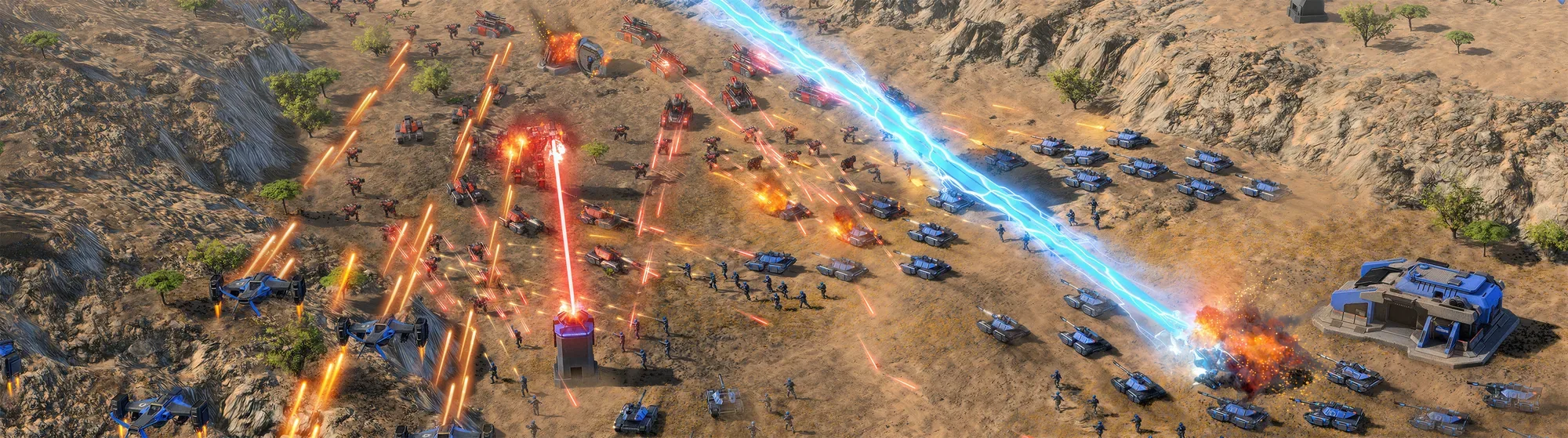
Core systems
Every unit joins an army. You select the army, choose a destination, and the formation handles much of the local movement. Reinforcements can be routed to the army from suitable production buildings, which makes where you build a strategic decision rather than a base-management chore.
Regions provide income, power and space for production. Connectivity matters: a forward region can be cut off. Terrain limits sight and weapon arcs. Long-range units need clear angles, front-line units need support and static defences need a plan beyond “build more”.
Modes & campaign
The campaign follows the United Earth Forces and doubles as the tutorial. Instant Action and skirmish let you choose a battlefield and fight AI opponents. Online supports competitive and cooperative play for up to eight players, with AI backfill for empty slots.
Matches can end through the Turinium victory condition, where teams accumulate points by holding generators, or by destroying the enemy headquarters. Procedural maps keep the terrain from becoming a memorised list of openings.
Read the modes guide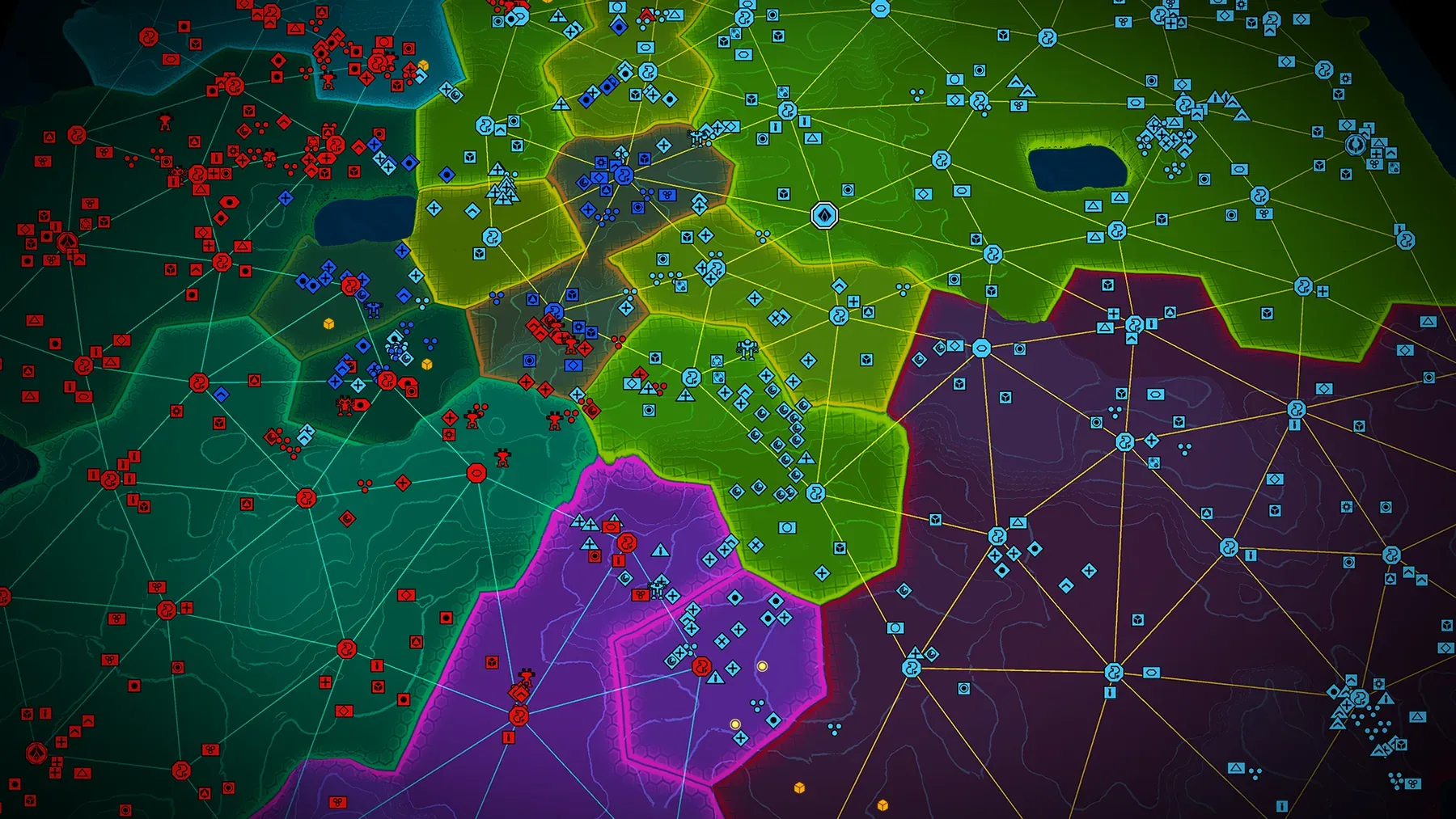
Practical details
The launch build is Windows-only. These are the official Steam requirements; use the checker for a step-by-step readiness list.
Open the PC requirements checker| Spec | Minimum | Recommended |
|---|---|---|
| OS | Windows 10 / 11 64-bit | Windows 10 / 11 64-bit |
| CPU | AMD Ryzen 5 2400G / Intel i5-8500 | AMD Ryzen 5 5600X / Intel i5-11600K |
| Memory | 8 GB RAM | 16 GB RAM |
| GPU | AMD RX 580 8GB / NVIDIA GTX 1660 6GB | AMD RX 6750 XT 8GB / NVIDIA RTX 3070 8GB |
| DirectX | Version 12 | Version 12 |
| Storage | 50 GB · SSD recommended | 50 GB · SSD recommended |
| Network | Broadband internet connection | Broadband internet connection |
Source: official Steam store listing, accessed November 1, 2026. Requirements can change before launch.
Questions
For release timing, editions and platform details, see the dedicated release brief.
Full release briefIt is a sequel to the 2016 real-time strategy game. It brings back the Post-Human Coalition and Substrate, adds the human United Earth Forces and moves the story to a new campaign told from the UEF point of view.
No. Stardock says the story is told from a different point of view and the campaign introduces the universe. The campaign also contains the tutorial for the sequel’s systems.
Yes. The initial campaign follows the United Earth Forces. Stardock describes it as a story of survival and restoration that takes the conflict to Earth and other locations in the solar system.
Yes. Stardock has confirmed full offline play for the campaign and skirmish against AI. Online multiplayer and co-op require a connection.
The launch platform is Windows PC via Steam, Stardock and other partners. Steam lists 14 supported languages, including English, Simplified Chinese, Japanese, Korean, French, German, Spanish, Polish, Russian and more. English is listed with full audio support.
No. Stardock has said a user-friendly map editor is hoped for after release, and a benchmark is not planned for launch. The engine is described as highly moddable, but native in-game mod support is a post-ship consideration.
Next
Read the doctrine and confirmed roster before you choose a main.
Faction dossiersNext
Official requirements plus a practical self-check for storage and hardware.
PC readiness toolEvidence log
Game facts, mode scope and development intent are drawn from the official sources below. The strategic framing on this page is our analysis, not a review of the finished game.
Last verified November 1, 2026